Ice bath
Ice bath and cold plunge in Bali: buy, install, hold 3–15 °C
Installed from IDR 45M (about USD 2,700): a timber plunge with a ½–1 HP chiller, filtration and ozone, holding 3–15 °C through a Bali afternoon. Built by a Canggu crew with 100+ projects behind it.
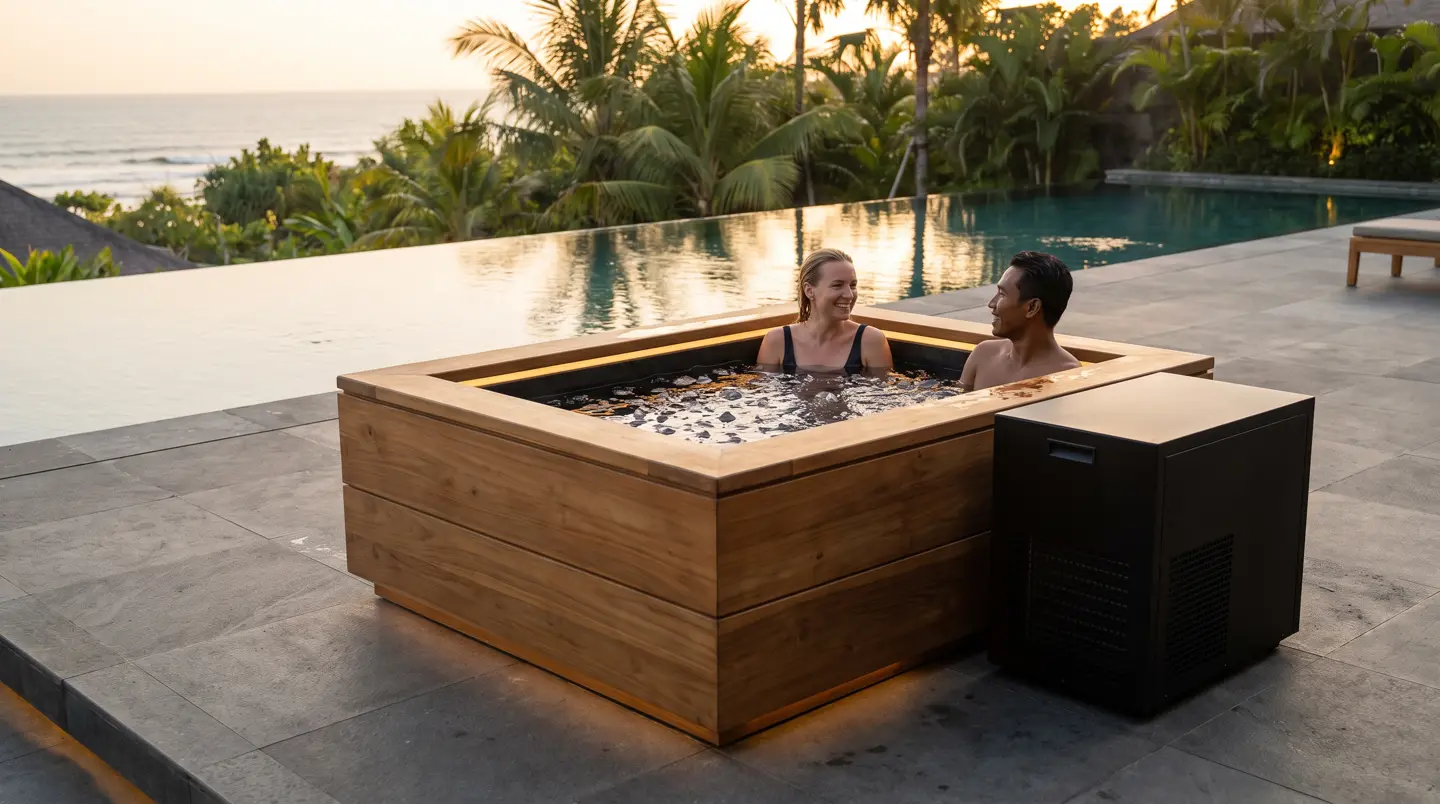
Think of it as a larch or thermowood tub with a liner, a ½–1 HP chiller doing the work of holding 3–15 °C against Bali's 30 °C tap water, plus ozone or UV filtration to keep it clean between uses. We build them for villa owners, surfers and recovery studios anywhere from Pererenan to Uluwatu, installed for IDR 45–90 million (approx. USD 2,700–5,500), 1–2 weeks from start to finish.
Why bags of ice never really work here
Tap water in Bali leaves the pipe at 28–30 °C, and a 350-litre tub sitting in the shade keeps absorbing heat from the surrounding air all day regardless. Twenty kilograms of ice will pull that tub down by about 4–5 °C and be melted within two hours — fine for a demonstration, not for something used every morning. Sizing a chiller properly comes down to three numbers: how many litres the tub holds, the temperature you are aiming for, and roughly how many people get in per hour. A ½ HP unit holds a single 300–400 litre villa tub at 8–15 °C with the lid on; step up to 1 HP and the same tub reaches 3–8 °C, or sits steady at 10 °C even when four or five surfers cycle through after a session at Batu Bolong. Pulling the water from 30 °C down to 8 °C takes 6–9 hours on ½ HP and 3–5 hours on 1 HP, which is why most chillers run overnight on a timer so the tub is sitting at temperature by 06:00. The full arithmetic is laid out in our chiller sizing guide.
What is actually inside the tub
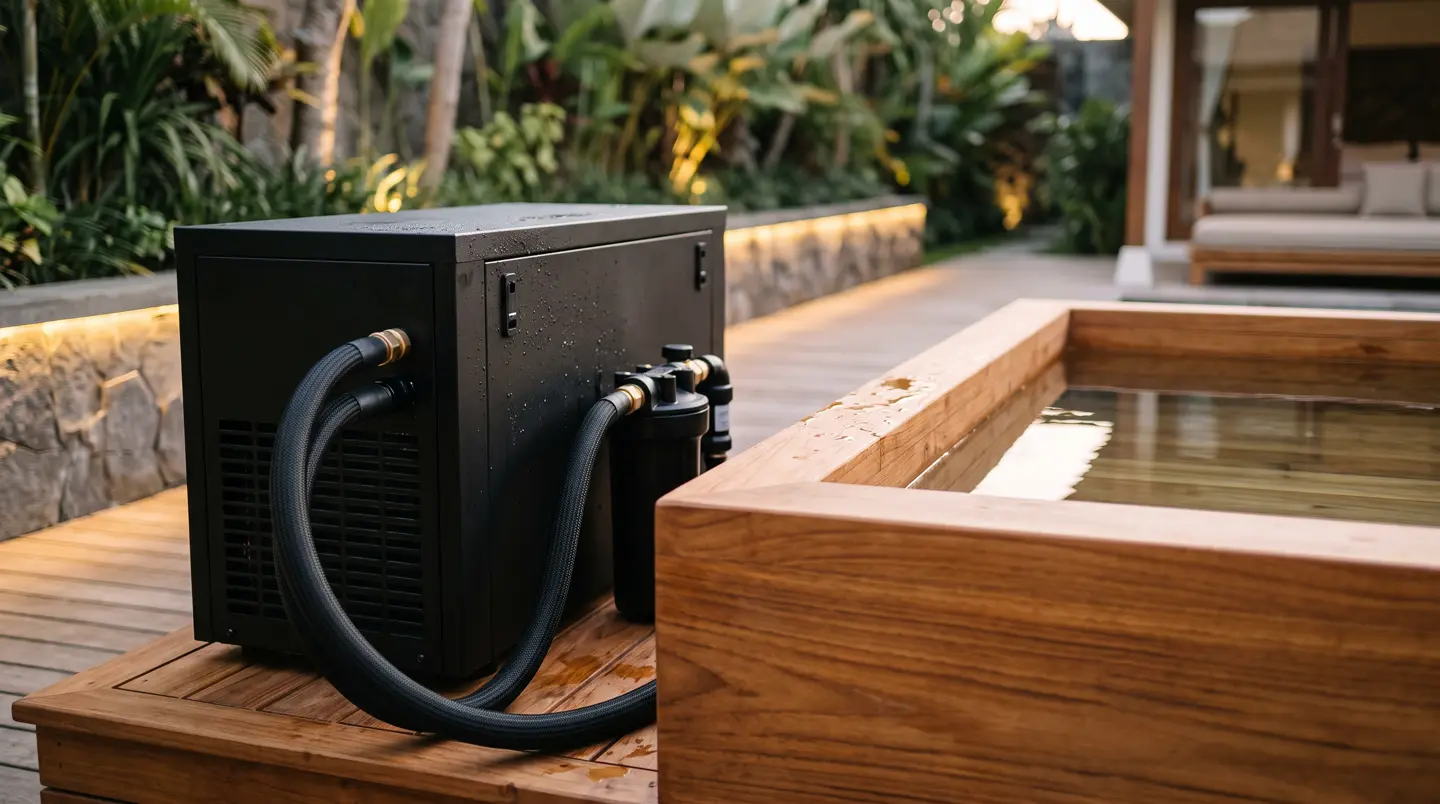
The tub itself is built from larch or thermowood staves around a stainless-banded frame, with a food-grade liner inside so the timber never actually sits in water — teak is an option too, though it is heavier and pricier, so we only spec it when someone specifically asks. Water runs in a loop: tub, skimmer, cartridge filter, circulation pump, chiller, return jet, with an ozone or UV stage tucked in after the filter so the water stays clear for weeks rather than days between changes. A sloped drain in the deck carries the water away at change time, which matters more than people expect on rice-field plots around Pererenan and Seseh, where tipping 400 litres onto the neighbour's paddy is not a popular move. Outdoors, the tub gets a hardwood lid and a shaded spot; the chiller sits within 3 m on a level pad with airflow on all sides and, anywhere from Berawa down to Bingin, a monthly rinse to keep salt off the condenser fins.
Scale the same design up for a recovery studio and the logic does not change, only the numbers: two or three tubs, a dedicated 1 HP chiller on each, a 16-hour duty cycle, and a water-change and filter schedule handed over in writing. Throughput at that scale is covered in our recovery studio guide.
Power draw, water source and where it goes
Of everything in this build, the chiller is the lightest electrical load. A ½ HP unit pulls around 0.5 kW, a 1 HP unit about 1 kW, plus roughly 100 W for the circulation pump — so a cold plunge runs on any 2,200 VA supply or larger without touching your PLN capacity. It still gets a dedicated breaker and an ELCB, because water and wiring share the same deck. Expect a running cost of IDR 300,000–700,000 a month at daily use, mostly the chiller working through the afternoon heat. Tap, well or tanker water all work; well water on the Bukit around Uluwatu and Ungasan tends to carry minerals that wear filters out faster, so we add a pre-filter for those sites specifically.
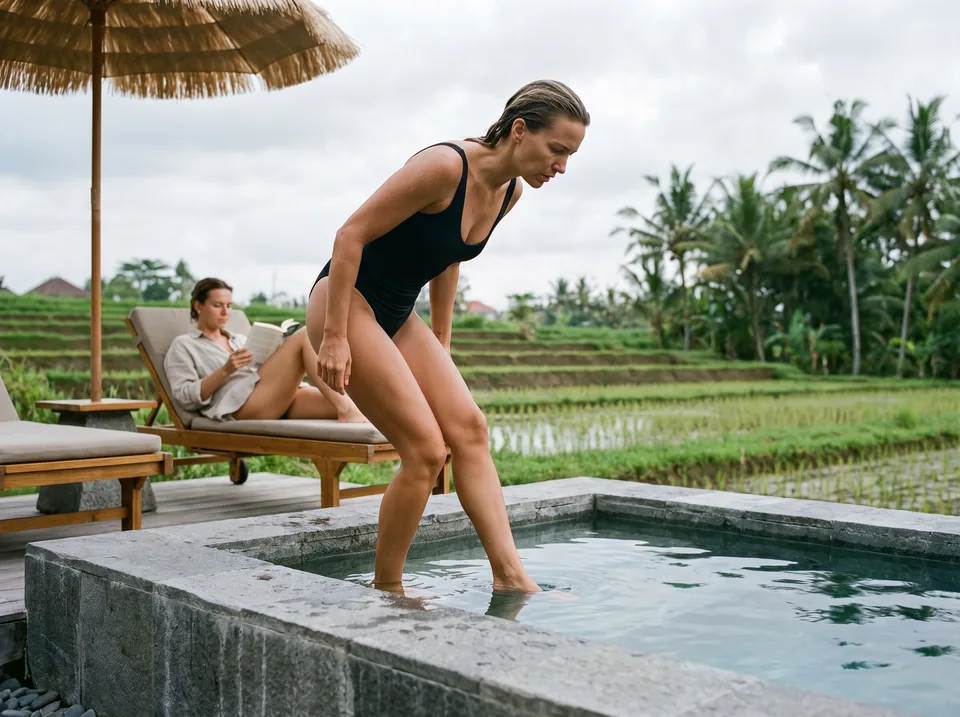
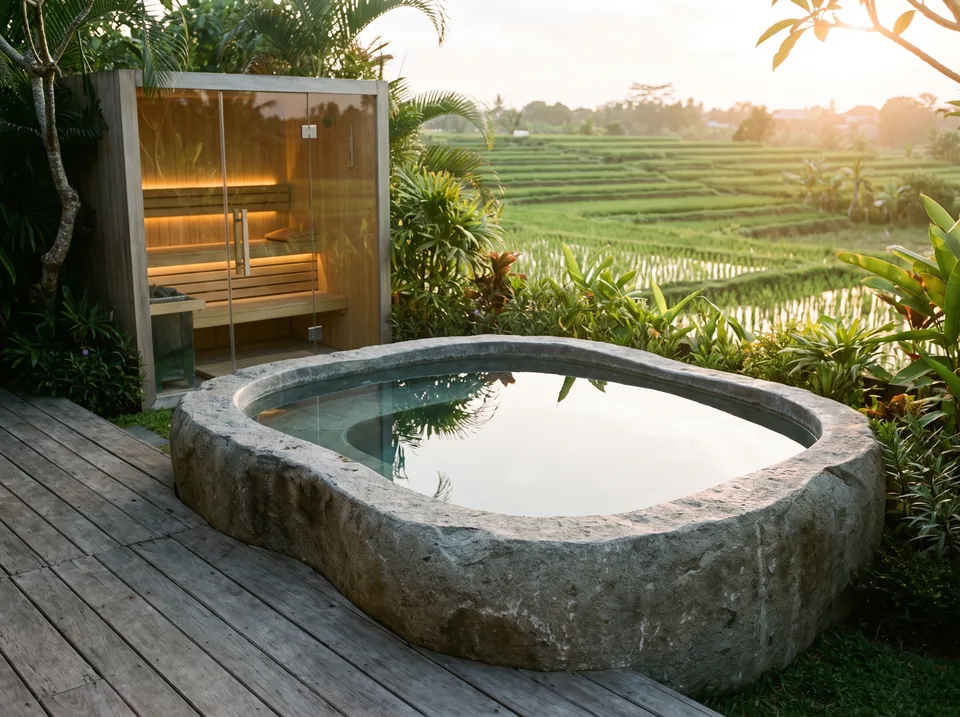
Most owners put the tub next to the sauna or somewhere on the pool deck, close enough that hot and cold are ten steps apart at most; in Ubud's jungle villas we tuck it under the roof overhang instead, since falling leaves will clog a skimmer within days otherwise. A dry sauna paired with a plunge is what most villa owners end up ordering, and both appear side by side on the price list. Installation runs 1–2 weeks on site; Nusa Lembongan and the Gilis are reached by cargo boat, quoted on request.
Comparing a custom plunge with a ready-made tub bought online? Our guide on buying an ice bath in Bali sets them side by side, and the chiller running-cost guide covers the monthly bill and noise.
What it costs, item by item
| Scope | Indicative cost |
|---|---|
| Chiller only, ½–1 HP, plumbed into an existing tub | IDR 25–55 million |
| Full timber plunge with chiller, delivered and installed | IDR 45–90 million |
| Accessory set — lid, steps, thermometer | IDR 1.5–8 million |
| Monthly running cost at daily use | IDR 300,000–700,000 |
Ballpark figures in IDR — IDR 45–90 million works out to roughly USD 2,700–5,500 at IDR 16,500 per USD — and already covers filtration plus ozone or UV treatment.
Questions about keeping the water cold
How often should the plunge water be changed?
With filtration running plus an ozone or UV stage, a villa tub used by one household goes 3–6 weeks between full changes, and a studio tub cycling through dozens of people a day needs a weekly refresh. Skip the treatment stage entirely and you are back to draining it every 2–3 days, which is exactly why we do not sell a tub without filtration built in.
We are right on the coast — does salt air shorten the chiller's life?
It will, if the unit sits where sea spray can reach it. We position the chiller under cover, at least a few metres back from direct spray, and specify a coated or marine-grade condenser for anything within a couple of hundred metres of the water. Even then, a quick rinse of the condenser fins once a month keeps salt crystals from building up and cutting the chiller's cooling capacity over a season.
Can a plunge go in while the villa keeps taking bookings?
Yes — this is the more common scenario for us, not the exception. The tub, chiller and filtration arrive largely pre-assembled, so the on-site work is plumbing, an electrical connection and a short pressure test, usually finished within the length of a single booking gap. We work around the housekeeping schedule and checkout windows so the pool deck is back to normal before the next guest checks in.
What temperature should we actually run it at?
Most owners settle somewhere between 8 and 12 °C for regular use, and go colder only for short, deliberate sessions — there is no single correct number, it is a personal call. The controller adjusts in about a minute; what limits how low you can go on a hot afternoon is chiller size, not the setting itself.
Where we install these
Pair it with
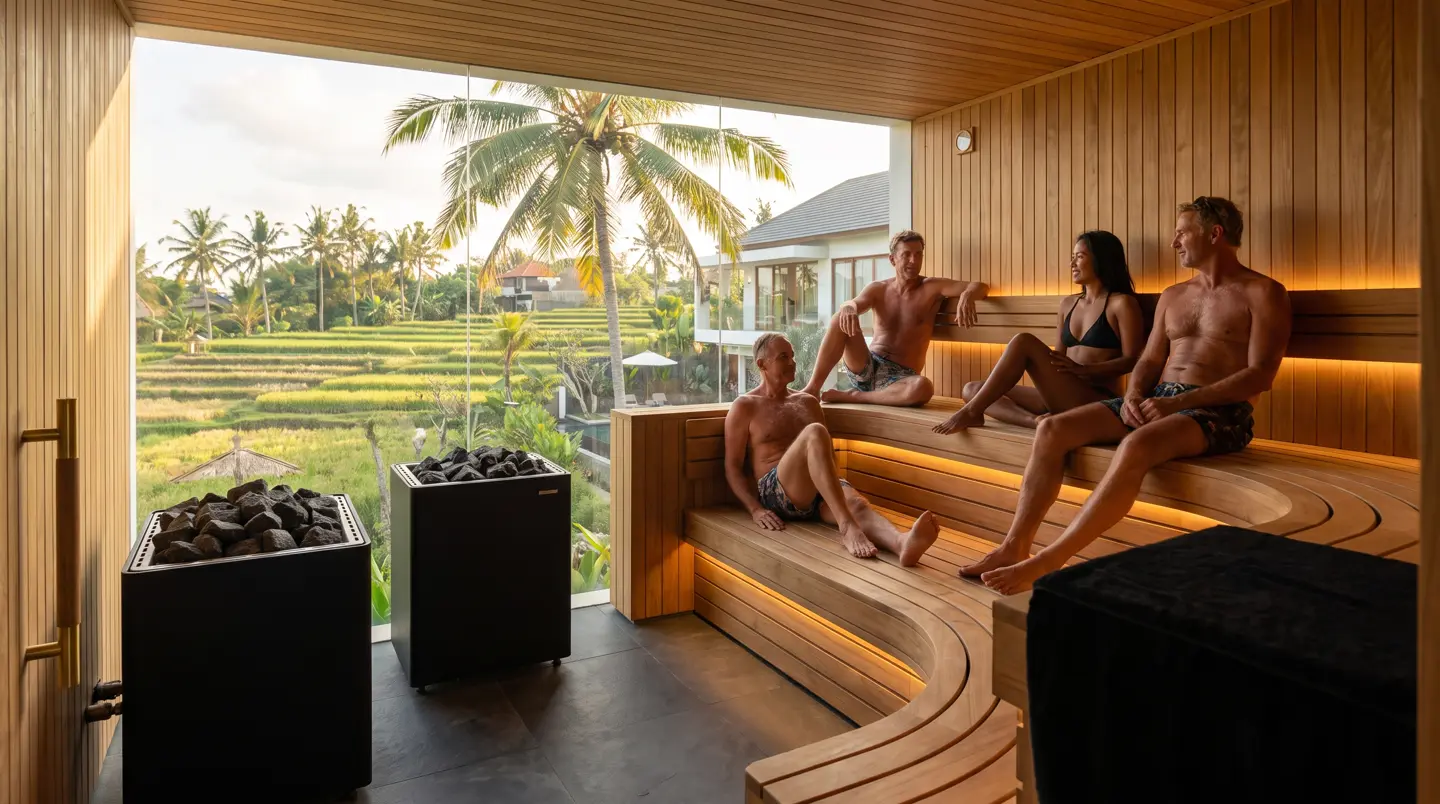
Dry sauna
70–90 °C cedar, spruce or thermowood cabins, sized to fit the room you have and the meter you are allowed to run.
IDR 60–120 million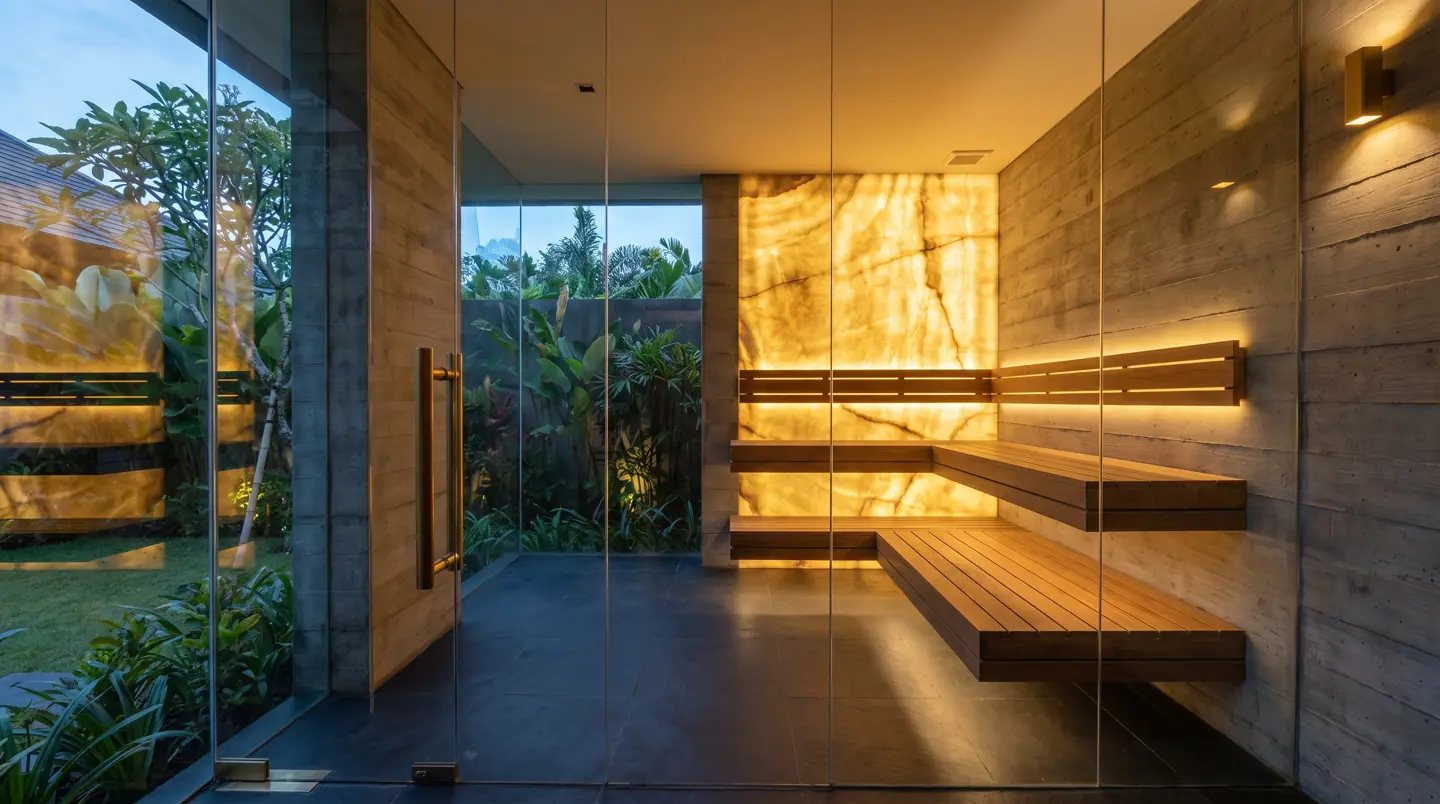
Luxury sauna
Glass-fronted or roofed outdoor cabins finished in stone, thermowood and hidden LED, built for villas where the sauna has to look as good in photos as it feels to sit in.
IDR 80–150 million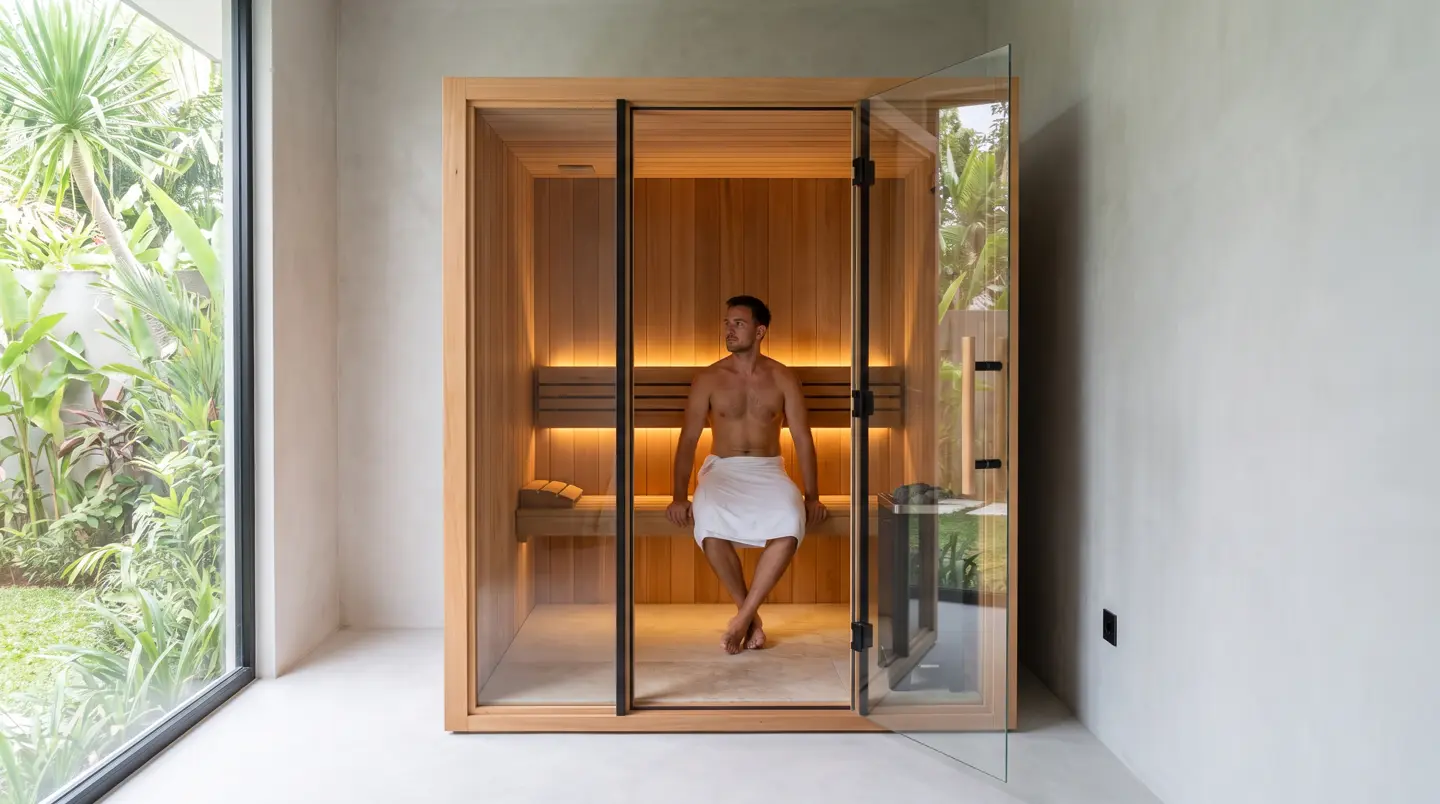
Prefab cabin
A 1.5×1.2 m cabin built ahead of time and shipped complete, so a spare room, terrace or guesthouse can be heating within days, not weeks.
IDR 15–35 millionStart here
Tell us what you're picturing, we'll price it out
A couple of minutes here saves a week of back-and-forth later — a project manager replies on WhatsApp within working hours, usually the same day.
Ready to see it in your own space?
Photograph the spot you have in mind, plus your meter box, and send both over WhatsApp. Expect a reply the same working day and a survey slot inside the week.