Infrared sauna
Infrared sauna in Bali: 45–60 °C on a standard villa supply
Carbon-panel cabins for one or two on a standard villa supply: 1.7–2.4 kW, no PLN upgrade, installed in 1–2 days. We have been fitting them in older Seminyak and Umalas villas for three years.
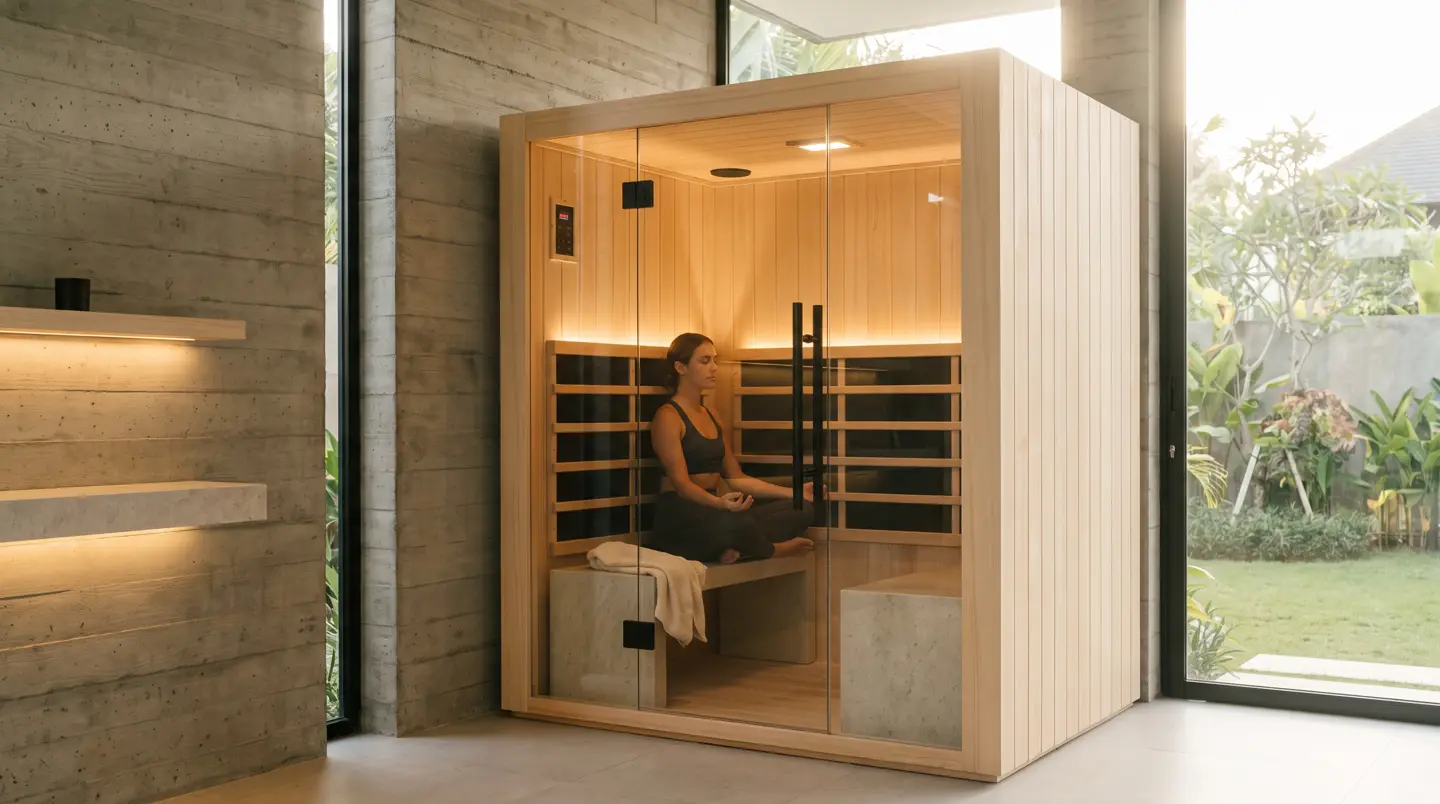
An infrared sauna from Sauna Canggu is a one- or two-person cabin with carbon heating panels that warm the body directly at 45–60 °C, drawing only 1.7–2.4 kW. It is the answer for Bali villas, apartments and guesthouses on a 2,200–5,500 VA supply. Indicative price IDR 30–70 million (approx. USD 1,800–4,200), installed and tested in 1–2 days.
How an infrared sauna differs from a dry sauna, and who it suits in Bali
A dry sauna heats the air to 70–90 °C and the air heats you. An infrared sauna in Bali keeps the cabin at 45–60 °C and heats the body directly with long-wave radiation from carbon panels in the walls and under the bench, so you sweat as hard after 30 minutes without the air ever feeling harsh. That makes it the right tool for three groups. Apartment and townhouse owners in Seminyak, Berawa and Sanur who have no way to raise the electricity supply. Guesthouses in Ubud and Umalas that want a wellness amenity a guest can use alone without supervision. And people who find 85 °C unpleasant but want the post-session recovery, which in our experience is a good share of the surf crowd in Canggu after a dawn session.
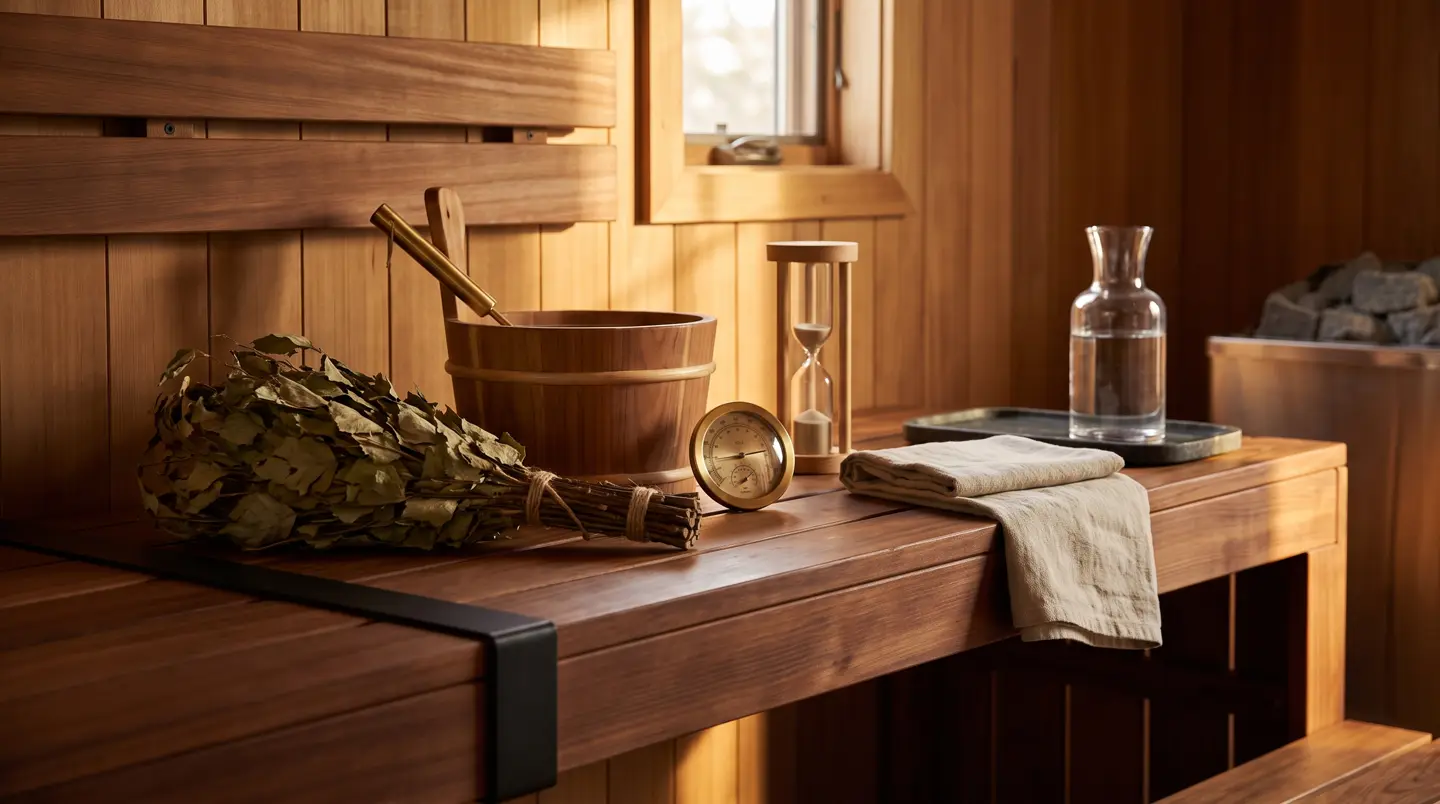
What it does not do is throw water on stones. There is no löyly, no steam burst and no 90 °C. If that ritual is the point, a custom dry sauna is the right room and the electricity question has to be solved first.
Why infrared is the answer for a 2,200–5,500 VA villa
Villas and apartments across Bali typically sit on PLN residential supplies of 1,300–5,500 VA. A 6 kW sauna heater needs 7,700 VA at minimum, 9 kW needs 11,000 VA, and the upgrade is applied for and paid by the owner, which in a leased villa or a strata building is often not on the table. An infrared cabin for one or two draws 1.7–2.4 kW across all its panels, roughly what a large air-conditioner or a water heater pulls, and runs on a normal 220 V circuit. We still give it a dedicated circuit with its own breaker and an ELCB, because carbon panels and a wet room deserve the same protection as a stone heater. On a 2,200 VA meter the household simply switches the water heater off during a session; on 3,500 VA and above nothing needs to change.
Running cost is the lowest of any hot room we build: typically IDR 100,000–250,000 per month for daily half-hour sessions at PLN rates, because the panels are at full draw for only the first ten minutes and cycle afterwards.
Infrared sauna installation in Bali: humidity, salt air and lifespan
An infrared cabin is delivered assembled or in flat panels and is heating within 1–2 days, including the electrical connection and a test session. Two things decide how long it lasts here. First, humidity: the cabin should live in a room that is either air-conditioned or ventilated, never on an open terrace, because carbon panels and the hemlock or cedar cladding absorb moisture over a wet season and the electronics dislike condensation. Second, salt air: in Berawa, Seseh, Bingin and on the Sanur beachfront we specify stainless fixings, a sealed control panel and a small drying routine, which is simply running the cabin for ten minutes once a week when it is not in use.
Cabins come with a 2-year structural warranty and the panel electronics with a 1–2 year factory warranty. If you are comparing an infrared cabin against a prefab or a full dry sauna, the price list sets the three side by side, and the Canggu and Pererenan area page covers what the coastal microclimate does to each.
Indicative pricing
| Item | Price (IDR) |
|---|---|
| Infrared cabin 1–2 people, installed | IDR 30–70 million |
| Dedicated circuit, breaker and ELCB | included |
| Accessories: backrest, towel rail, thermometer | IDR 1.5–8 million |
| Running cost per month, daily use | IDR 100,000–250,000 |
Indicative, in IDR; IDR 30–70 million is approx. USD 1,800–4,200 at IDR 16,500 per USD.
Frequently asked questions
Is an infrared sauna as effective as a dry sauna?
A 30–40 minute infrared session produces a comparable sweat to 15–20 minutes at 85 °C; the dry sauna is hotter and more social, infrared is gentler and cheaper to run. We make no medical claims for either.
Can the infrared cabin go on a covered terrace?
Only if the terrace is enclosed on the weather side and does not get wind-blown rain. In practice that means a pool house or an enclosed veranda. Open terraces in Ubud or on the Bukit are too damp for the electronics.
How much does it cost to run an infrared sauna in Bali?
Typically IDR 100,000–250,000 a month for a daily session at PLN residential rates. Because the panels cycle once the cabin is warm, a 2.4 kW cabin rarely averages more than 1.5 kW over a session.
Full-spectrum or carbon panels?
We fit carbon far-infrared panels as standard because they run cooler at the surface and are the more durable option in humidity. Full-spectrum front panels can be added for owners who want a faster warm-up; ask during the survey.
Service areas
Other products
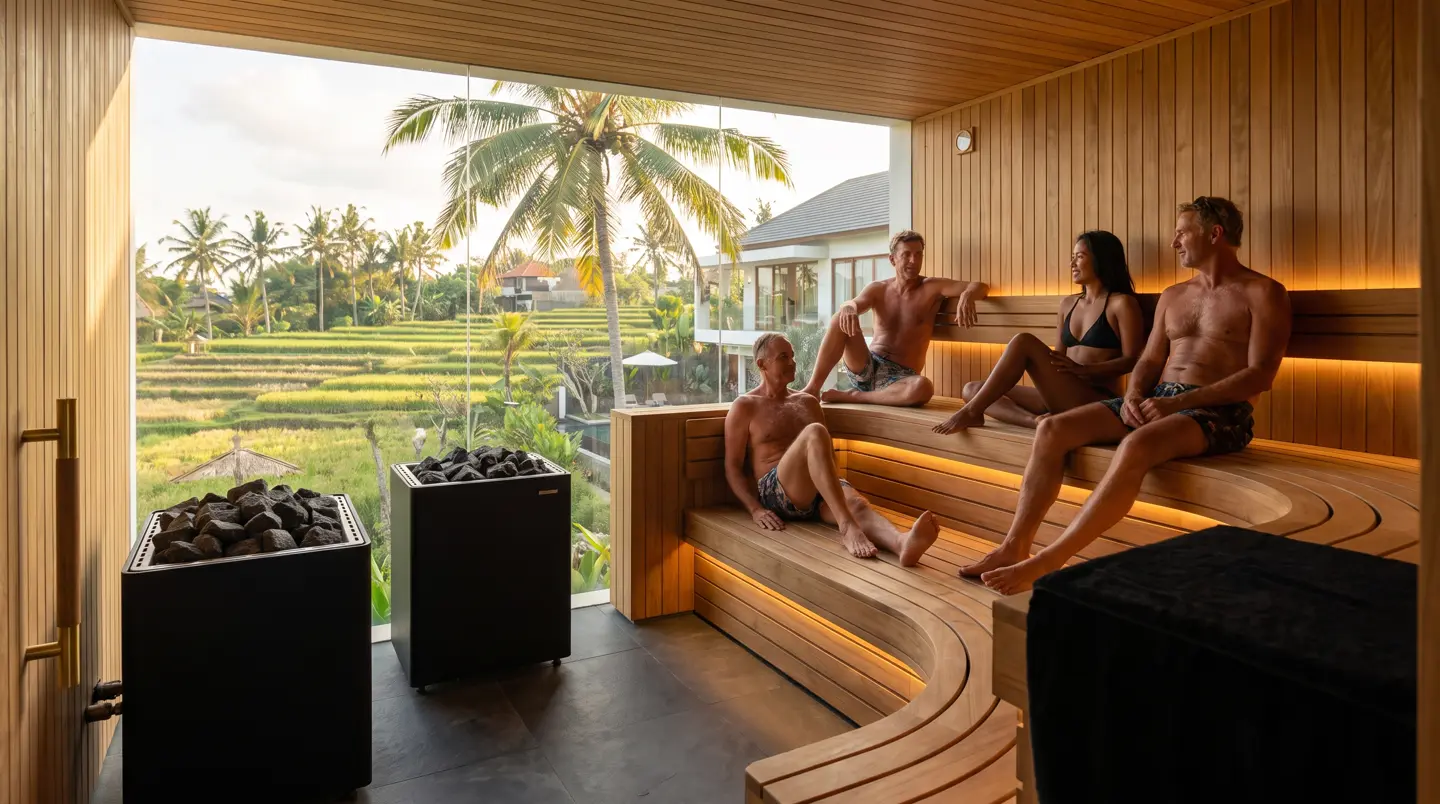
Dry sauna
Finnish-style 70–90 °C cabins in cedar, spruce or thermowood, built to your room and your meter.
IDR 60–120 million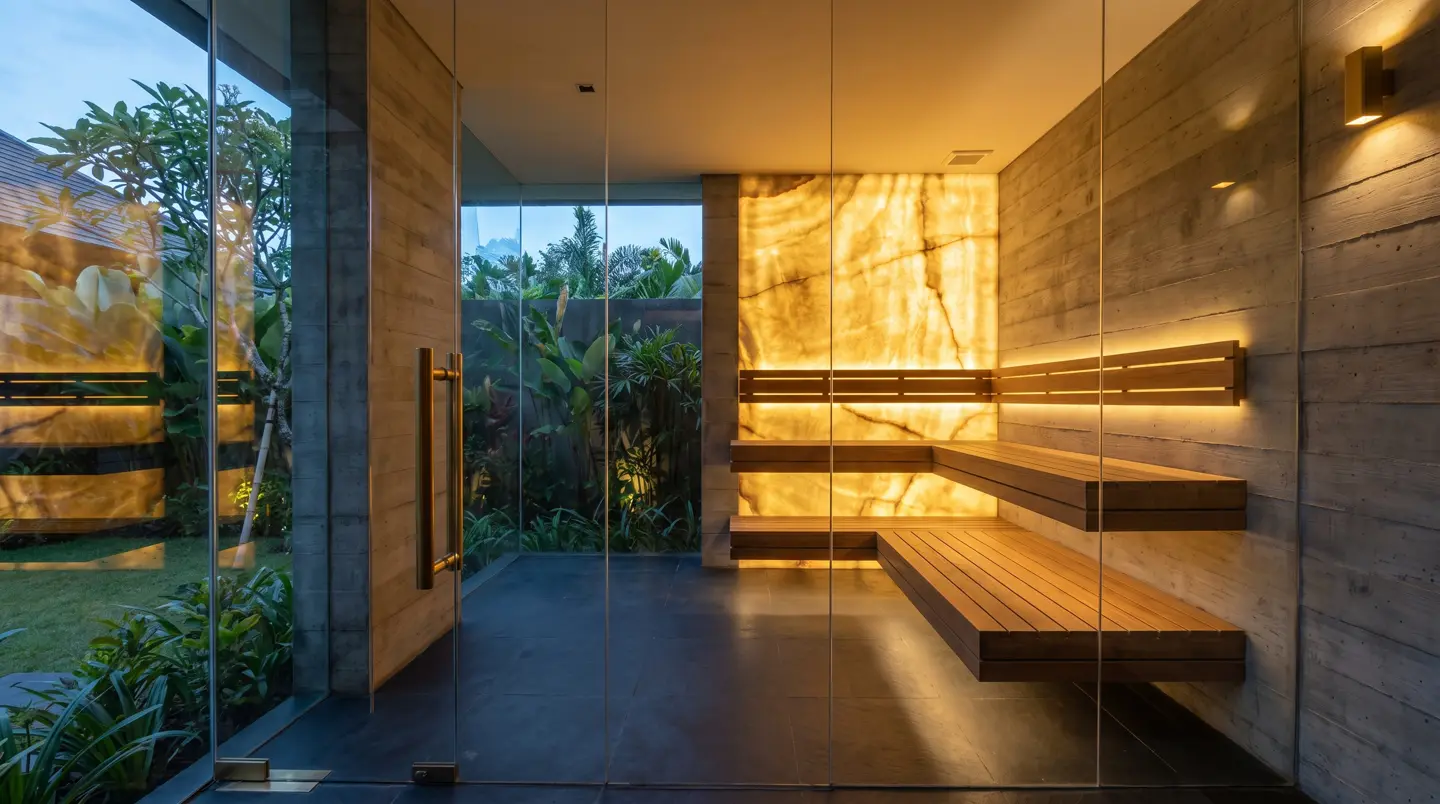
Luxury sauna
Glass-front and roofed outdoor designer cabins with stone, LED and thermowood, for villas that need to photograph as well as they heat.
IDR 80–150 million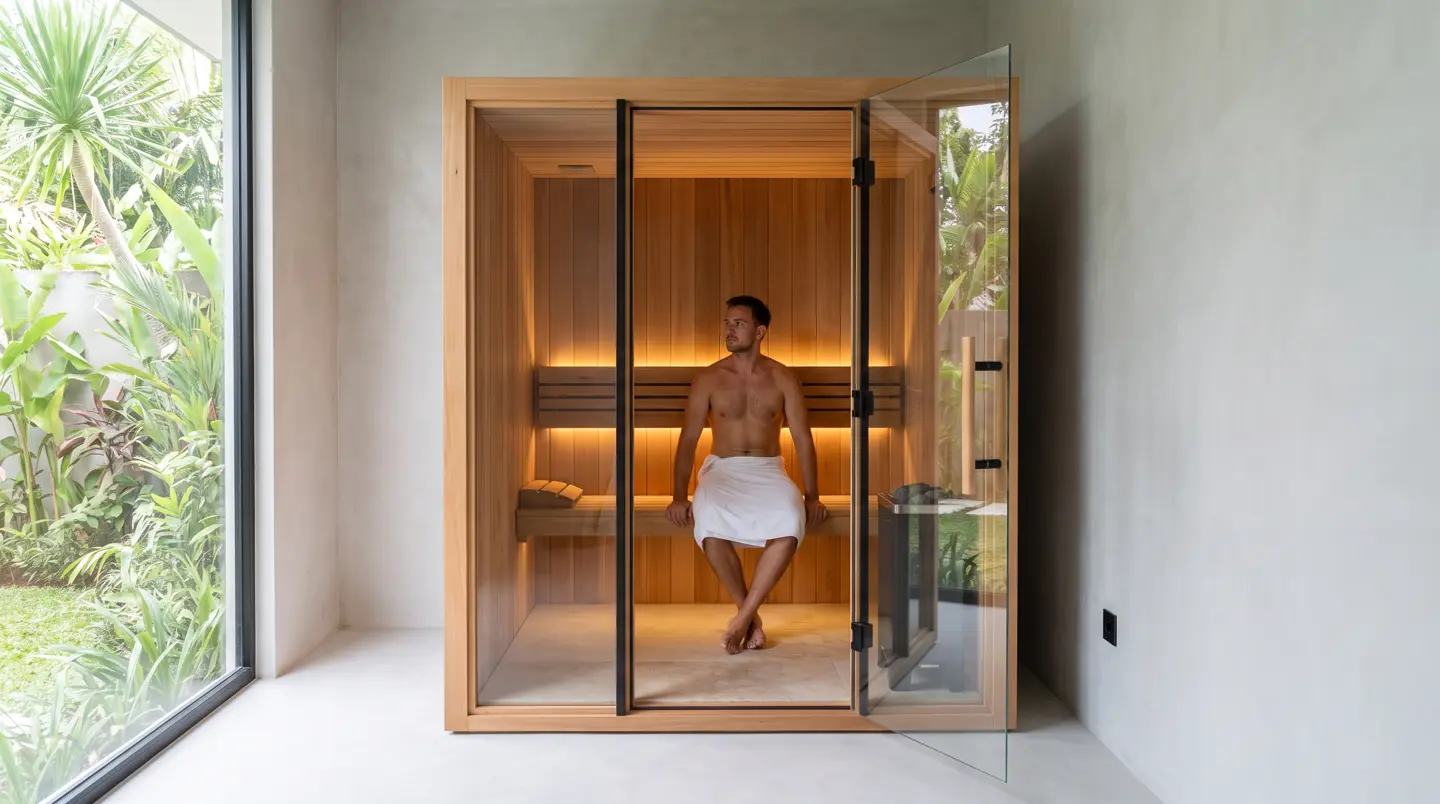
Prefab cabin
Ready-built 1.5×1.2 m cabins for a spare room, terrace or guesthouse, delivered and heating within days.
IDR 15–35 millionQuote request
Tell us about the spot; we'll send an itemised quote
Two minutes here saves a week of back-and-forth. A project manager replies on WhatsApp within working hours, usually the same day.
Get a quote for your villa or studio
Send a couple of photos of the spot and your meter box on WhatsApp. You will hear back the same working day and have a survey date within the week.